Skip to content

2026 Top Necklace Jewelry Types for Global Buyers

Global buyers are entering a necklace jewelry market shaped by personal identity, practical styling, and changing purchasing habits. In 2026, customers may look beyond simple decoration. They may compare metal quality, gemstone origin, comfort, durability, and the story behind each design. A delicate gold chain can suit office clothing, while a sculptural pendant may transform a plain linen dress. Small details matter.

Jewelry historian and author Vivienne Becker says, “Jewelry is a form of personal expression.” Her view remains useful for international buyers. It explains why layered necklaces, personalized pendants, colored gemstones, and vintage-inspired chains continue attracting attention. Buyers increasingly want pieces that feel individual, not endlessly repeated. Still, trends can be misleading. A popular style may sell quickly but lose relevance after one season.

This guide examines the top necklace jewelry types expected to interest global buyers in 2026. It considers visual appeal, material choices, wearing comfort, retail potential, and consumer expectations. Fine gold necklaces remain important, but silver, recycled metals, pearls, enamel, and responsibly sourced stones also deserve attention. Not every “sustainable” claim is equally reliable. Buyers should request clear product information, realistic care guidance, and transparent sourcing details. That takes extra time. It is worth it.

The strongest opportunity may not be the most dramatic design. A well-made necklace with a secure clasp, balanced weight, and adaptable styling can earn repeat purchases. Market preferences differ across regions, age groups, and income levels. This overview offers direction, not certainty. Fashion changes. Good judgment still matters.
2026 Top Necklace Jewelry Types for Global Buyers

Necklace Jewelry Categories and Their Defining Features

2026 Top Necklace Jewelry Types for Global Buyers

Necklace categories now reflect different styling habits, budgets, and cultural preferences. Chain necklaces remain versatile, using cable, curb, box, rope, or snake links. Their defining feature is the link structure, which controls shine, weight, and durability. Pendant necklaces add a focal element, such as a geometric charm, gemstone, or symbolic disc. They suit buyers seeking visible personalization without excessive volume.

Chokers sit closely around the neck and often use metal, leather, pearls, or flexible textile materials. Bib and layered necklaces create stronger visual impact through multiple strands and graduated lengths. Pearl necklaces offer a softer appearance, but buyers should check pearl type, surface quality, luster, and uniformity. The World Jewellery Confederation emphasizes consistent grading language, although commercial descriptions can still vary between suppliers.

Grand View Research valued the global jewelry market at approximately USD 353.26 billion in 2023. Its 2024 analysis projected a 6.7% compound annual growth rate through 2030. This growth supports broader demand for lightweight, customizable, and everyday necklace designs.

Buyers should still compare plating thickness, clasp construction, metal disclosures, and size measurements. Small details matter. A thin chain may photograph beautifully but disappoint under daily wear. That judgment is easy to miss when product images dominate purchasing decisions.

Product testing, supplier documentation, and transparent material descriptions remain more reliable than appearance alone.

Popular Necklace Materials, Gemstones, and Crafting Methods

2026 Top Necklace Jewelry Types for Global Buyers

Necklace buying is moving toward clear material stories and practical craftsmanship. Grand View Research valued the global jewelry market at about USD 353 billion in 2023. Its report also expects strong growth through 2030. For buyers, recycled sterling silver and responsibly sourced gold offer flexible price points. The World Gold Council recorded about 1,877 tonnes of gold jewelry demand in 2024. This confirms gold’s lasting importance, although high prices may shift buyers toward vermeil or lighter chains. Freshwater pearls, amethyst, tourmaline, and lab-grown gemstones add color without always reaching fine-jewelry prices. Treatments must be disclosed. Not every stone is naturally untreated.

Tips: Ask for metal purity, gemstone origin, treatment details, and testing documents. Small details protect large orders.

Crafting methods now mix precision with visible human work. CAD design and lost-wax casting improve repeatability for export collections. CNC cutting creates clean surfaces, while hand polishing softens machine-made edges. Soldered links need careful inspection around clasps and jump rings. Enameling adds bright color, but uneven edges can reveal weak quality. Granulation and hand engraving create texture, though they increase labor time. Buyers should compare sample weight, plating thickness, clasp strength, and color consistency. I would not judge quality from photographs alone. Lighting can hide scratches, thin plating, and irregular stone settings. A reliable supplier should provide close-up images, material reports, and pre-shipment inspection options.

2026 Top Necklace Jewelry Types for Global Buyers – Popular Necklace Materials, Gemstones, and Crafting Methods

Necklace Type Typical Length Popular Base Materials Common Gemstones or Decorative Elements Typical Crafting Methods Key Buying Advantages Care and Sourcing Considerations
Chain Necklace 40–60 cm Sterling silver Gold Gold vermeil Stainless steel Usually plain metal; may include small pendants or charms Wire drawing, link forming, soldering, polishing, plating Versatile, easy to layer, and suitable for everyday wear and private-label collections Check metal purity, plating thickness, clasp strength, and nickel compliance for the destination market
Pendant Necklace 45–70 cm Gold Silver Brass Stainless steel Quartz, amethyst, cubic zirconia, pearl, enamel, or symbolic metal motifs Die casting, lost-wax casting, bezel setting, prong setting, hand polishing Strong visual focus and broad appeal across fashion, gifting, and occasion-wear segments Confirm pendant weight, stone security, chain-to-pendant connection, and coating durability
Layered Necklace 40–75 cm combined lengths Gold-plated brass Sterling silver Stainless steel Small crystals, pearls, beads, charms, and geometric metal details Multi-strand assembly, jump-ring connection, chain soldering, electroplating Creates a complete styling effect and supports coordinated fashion collections Evaluate strand separation, tangling resistance, clasp quality, and consistency of plating color
Choker Necklace 30–40 cm Velvet Leather Silver Gold-plated metal Pearls, crystals, enamel, lace, metal plaques, or minimalist pendants Cutting and stitching, chain assembly, riveting, soldering, surface finishing Distinctive fashion profile and suitable for trend-oriented collections Provide accurate neck measurements and check comfort, adjustability, edge finishing, and textile colorfastness
Pearl Necklace 40–90 cm Silk thread Sterling silver Gold Freshwater, Akoya, South Sea, or Tahitian cultured pearls Drilling, hand or machine knotting, pearl matching, clasp assembly Timeless gifting appeal and strong suitability for bridal, formal, and classic jewelry lines Specify pearl origin, cultured status, size, shape, luster, surface quality, and matching tolerance
Beaded Necklace 45–90 cm Cotton cord Nylon Sterling silver Gold-plated metal Agate, jade, lapis lazuli, tiger's eye, onyx, wood, glass, or ceramic beads Bead drilling, stringing, knotting, wire wrapping, handmade assembly Offers broad color variety, natural-material appeal, and flexible price positioning Check bead authenticity, dye stability, hole quality, cord abrasion resistance, and clasp construction
Gemstone Station Necklace 40–60 cm Gold Sterling silver Gold vermeil Diamond, sapphire, ruby, emerald, topaz, garnet, or cubic zirconia Prong setting, bezel setting, soldering, stone calibration, polishing Lightweight sparkle and a refined look suitable for premium everyday jewelry Request gemstone treatment disclosure, stone dimensions, setting security, and responsible sourcing documentation
Bar or Nameplate Necklace 40–50 cm Sterling silver Gold Gold-plated brass Stainless steel Often plain metal; optional cubic zirconia, enamel, or engraved details Laser engraving, stamping, CNC cutting, casting, polishing, plating Highly suitable for personalization, gifting, initials, dates, and text-based designs Confirm character limits, engraving accuracy, spelling approval process, and production lead time
Lariat Necklace 70–120 cm Gold-plated brass Sterling silver Stainless steel Pearls, crystal drops, metal beads, tassels, or small gemstones Long-chain assembly, sliding-knot construction, soldering, drop assembly Adjustable styling and an elegant silhouette without a traditional front clasp Test sliding mechanisms, chain flexibility, end-cap security, and resistance to snagging
Statement Collar Necklace 35–45 cm Brass Aluminum Resin Textile Enamel, glass, resin, crystals, shells, acrylic, or sculptural metal elements Stamping, laser cutting, resin molding, enamel application, riveting, hand assembly High visual impact for occasion wear, seasonal fashion, and editorial collections Assess total weight, skin comfort, component stability, color consistency, and protective packaging
Minimalist Pendant Necklace 40–55 cm 14K or 18K gold Sterling silver Gold vermeil Small diamond, pearl, birthstone, quartz, or plain polished metal Fine chain assembly, micro-prong setting, bezel setting, laser welding, polishing Easy to wear daily and suitable for capsule collections and personalized gifting Verify hallmarking, stone dimensions, chain gauge, clasp operation, and material disclosure
Vintage-Inspired Necklace 40–70 cm Antiqued brass Sterling silver Gold-plated metal Cameo, marcasite, crystal, glass cabochon, pearl, or enamel Filigree, granulation, repoussé, antiquing, hand patination, cabochon setting Distinctive decorative character and strong appeal in retro and heritage-inspired collections Check surface-treatment consistency, lead and cadmium compliance, sharp-edge control, and tarnish protection

Note: Material descriptions, gemstone names, and production methods reflect commonly used jewelry-industry practices. Exact specifications should be confirmed through product samples, laboratory reports, and destination-market regulations.

How to Choose Necklace Styles for Different Markets

2026 Top Necklace Jewelry Types for Global Buyers

Choosing necklace styles for different markets requires more than following seasonal images. Demand changes with climate, income, dress habits, and local preferences. Minimal chain necklaces often suit professional buyers seeking quiet, daily jewelry. Pendant necklaces add stronger visual identity for gift markets. Pearl strands and refined stations may perform better where formal dressing remains popular. Layered chains attract younger shoppers, but they need careful length planning and consistent styling.

Material details matter. Check metal composition, plating thickness, clasp strength, and available test reports before placing large orders. Warm, humid markets may need stronger plating and corrosion-resistant finishes. Lightweight designs can reduce shipping costs and improve comfort during long wear. Adjustable chains help retailers serve more customers with fewer size variations. Small details matter.

Cultural context also deserves careful review. Large symbols, color choices, and pendant shapes may carry different meanings across regions. Ask local buyers to review samples before production. Their feedback can reveal problems that online research misses. A common mistake is assuming one successful design will travel everywhere. It usually will not. Even popular styles may need changes in chain length, packaging, or price positioning. I would test three to five styles per market, track repeat inquiries, and compare returns with customer comments. Sales numbers alone can mislead. A necklace may sell quickly because of discounts, not because it fits long-term demand. Reliable sourcing, clear material labeling, and consistent quality checks build buyer confidence across markets.

Necklace Sizing, Layering, and Wearability Considerations

For global buyers, necklace sizing is a commercial detail, not a styling afterthought. A 40 cm chain sits close to the collarbone, while 45–50 cm usually creates a more relaxed daily fit. However, neck circumference, pendant weight, and clothing neckline can change the result. A “medium” length is not universal.

Grand View Research valued the global jewelry market at approximately US$353.26 billion in 2023. Its report projects an 8.5% compound annual growth rate from 2024 to 2030. This expanding market rewards adaptable necklace types, including adjustable chains, lightweight pendants, and simple chokers.

The World Gold Council recorded about 1,877 tonnes of global gold jewelry demand in 2024. That volume highlights the importance of comfort, durability, and material efficiency for international sourcing.

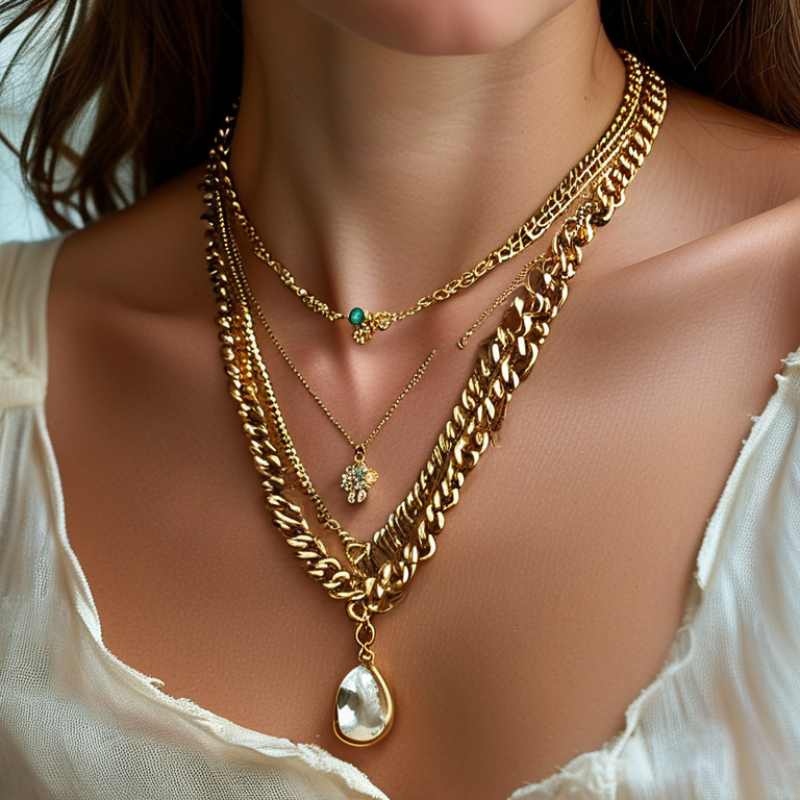
Layering works best when each necklace has a clear visual distance. Try 2–5 cm between chain lengths, rather than stacking identical sizes. A 40 cm choker, 45 cm pendant chain, and 50 cm fine chain can create depth without crowding. Thin chains usually reduce tangling, but heavier pendants may rotate during movement. I have seen fit guides fail when they ignore clasp position and pendant length. Buyers should test necklaces with knitwear, shirts, and open collars. Comfort can be overlooked. That mistake is expensive.

Global Buyer Trends, Quality Standards, and Sourcing Factors

Global buyers are selecting necklaces for more than visual appeal in 2026. They compare comfort, traceability, finish, and repeat-order stability. Lightweight chains remain practical for online retail, while layered pendants attract younger shoppers seeking adjustable styling. Pearl-inspired forms and responsibly sourced materials support quieter, more durable design stories.

Quality checks now begin with the clasp. Buyers inspect closure strength, chain symmetry, pendant edges, plating consistency, and skin-contact comfort. A sample should survive repeated opening, gentle pulling, and a short moisture test. Measurements must match the specification sheet, including chain length, pendant weight, metal composition, and tolerance. Certificates and laboratory reports help, but they do not replace physical inspection. Small defects matter.

Sourcing decisions depend on more than the lowest quotation. Reliable suppliers explain production capacity, material origins, lead times, packaging protection, and corrective procedures. Buyers should request pre-production samples and compare them with the final batch. This step is often skipped. That is risky. Clear product photographs, batch records, and independent inspections improve accountability across borders. Sustainability claims can remain vague when evidence is incomplete, so buyers should ask precise questions and record every response. My own review experience suggests that a beautiful sample can hide inconsistent soldering or weak plating. Rechecking remains necessary.