China Best Mens Fashion Belts Manufacturers?
China has become a major sourcing destination for belts, supported by mature leather, hardware, and textile supply chains. This makes “China Best Mens Fashion Belts Manufacturers?” a practical research question, not a simple ranking exercise. Buyers must examine construction quality, compliance systems, production capacity, and communication standards.
The State of Fashion 2025, published by McKinsey & Company and The Business of Fashion, describes a cautious market with pressure on consumer spending and brand margins. These conditions make cost control important. They also make durability more valuable. A belt should survive repeated bending, daily friction, and changing temperatures. Small details matter. Check edge painting, buckle plating, stitching density, leather thickness, and hole alignment. Euromonitor International’s apparel research also highlights the continuing importance of value, product quality, and responsible purchasing decisions. However, market reports rarely identify the best individual factories. Their conclusions need factory-level verification.
Giorgio Armani once said, “Accessories are important and becoming more and more important every day.” His observation explains why Mens Fashion Belts deserve careful product planning. The right manufacturer can support custom widths, logo placement, packaging, and consistent color matching. Yet a polished sample can hide weak batch control. That is where many sourcing decisions become imperfect. Buyers should request recent test records, production photographs, material specifications, and independent inspections. They should also compare several Chinese manufacturers before signing an agreement. No supplier is automatically the best. The strongest choice depends on design complexity, order volume, target price, delivery expectations, and quality tolerance. This guide examines those factors with practical evidence, while recognizing that supplier information can change quickly.
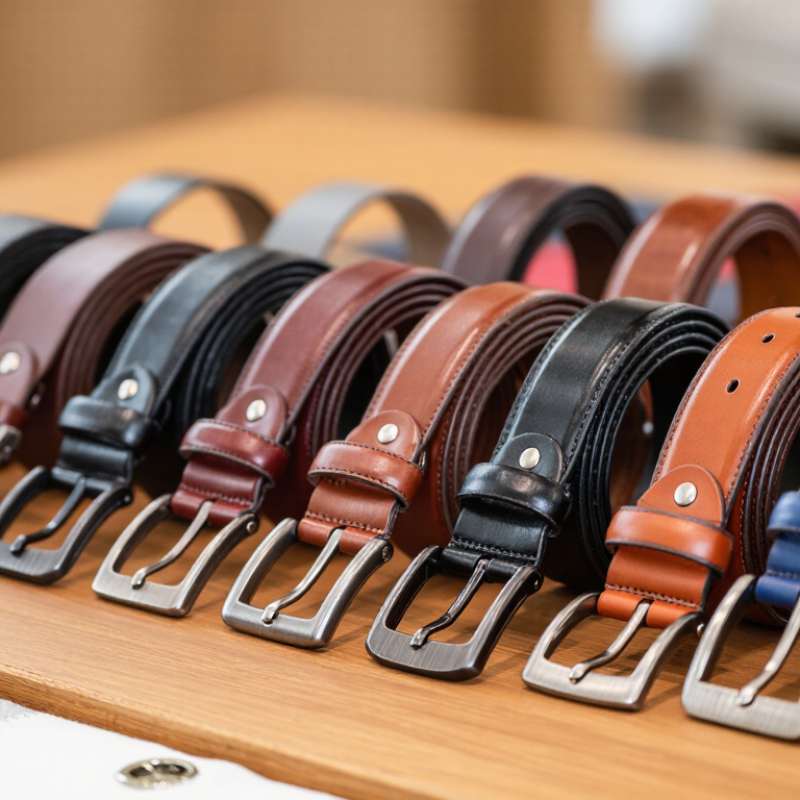
What Defines a Leading Men’s Fashion Belt Manufacturer in China?
A leading men’s fashion belt manufacturer in China combines material expertise, stable production, and transparent quality control. Grand View Research valued the global leather goods market at approximately USD 242.8 billion in 2023. This scale increases buyer expectations. Manufacturers must understand leather grading, polyurethane alternatives, edge painting, stitching density, and buckle corrosion resistance. Experienced teams inspect hides under controlled lighting. They also test colorfastness, abrasion, tensile strength, and dimensional stability before shipment.
Quality should be measurable.
A reliable factory documents each stage, from cutting patterns to final packing. It should provide material specifications, inspection records, sample approvals, and traceable batch numbers. The International Organization for Standardization reports that ISO 9001 supports consistent process management, although certification alone cannot guarantee product quality. Buyers should still review corrective-action records and conduct independent inspections. Production flexibility matters too. Useful capabilities include small trial orders, rapid sampling, accurate logo placement, and stable hardware sourcing. These details reduce costly revisions for overseas buyers.
No factory is flawless. A supplier may meet a sample standard yet struggle during peak-season production. That weakness deserves honest discussion. Leading manufacturers measure defect rates, delivery performance, and customer complaints over time. They improve patterns when belts curl, holes stretch, or finishes crack. Sustainability also needs evidence, not promises. Material declarations, responsible sourcing records, and controlled wastewater practices are stronger signals than attractive factory photographs.
Materials, Designs, and Production Standards to Compare
China’s best men’s fashion belt manufacturers should be compared by materials, construction, and evidence. Full-grain leather offers visible grain and strong edge retention. Split leather costs less, but coating quality becomes critical. PU and recycled polyester suit vegan or lightweight collections. The 2024 Textile Exchange Materials Market Report recorded 124 million tonnes of global fiber production in 2023. This figure supports careful material verification, not automatic sustainability claims.
Request material composition, thickness, tensile strength, and finish samples. A reliable factory should explain hide grading, cutting yield, dye testing, and buckle assembly. Check ISO 9001 quality procedures and ISO 14001 environmental controls. For metal parts, ask for nickel-release testing under EN 1811. Inspect belt holes for clean punching, stitching tension, and edge paint adhesion. AQL 2.5 can support sampling, but it is not a complete production standard. Small defects still matter.
Tips: Compare three pre-production samples. Bend each belt repeatedly. Check cracking, odor, color transfer, and buckle movement. Ask for test reports with laboratory names and dates. Textile Exchange data is useful, but it does not verify one supplier’s recycled content. That gap deserves attention. I would also request batch traceability and carton photos before shipment. Perfect samples can hide inconsistent bulk production. Needlessly trusting them is a common mistake.
How to Evaluate China’s Belt Manufacturers and Suppliers
China Best Mens Fashion Belts Manufacturers?
Evaluating Chinese belt manufacturers requires more than comparing online prices. Request the company’s registration details, factory address, production photos, and export experience. A reliable supplier should explain leather grades, coating materials, buckle alloys, and production tolerances clearly. Vague answers are warning signs. Ask for recent samples, not only catalog images. Inspect edge painting, stitching, buckle attachment, hole spacing, and odor. Small defects often become large complaints in bulk orders.
Factory capacity matters. Confirm monthly output, minimum order quantities, lead times, and backup production plans. Review quality-control records and request an inspection before shipment. Useful checks include belt length, material thickness, color consistency, surface scratches, and packaging strength. Ask whether materials can be traced to documented sources and whether products meet the destination market’s safety requirements. Written specifications reduce misunderstandings. Verbal promises do not.
Communication is another practical test. Send the same technical questions to several suppliers and compare their precision.
My own early mistake was focusing too heavily on the lowest quotation. The cheaper option later required more corrections and caused delays. That lesson still matters.
A professional supplier should accept reasonable revisions, report problems early, and provide a clear process for replacements or rework. Visit the factory when possible, but remember that one clean showroom proves little. Check production areas, storage conditions, worker procedures, and actual order records before making a decision.
OEM, Customization, Pricing, and Export Support Options
China Best Mens Fashion Belts Manufacturers?
Reliable Chinese belt manufacturers usually support OEM production, custom designs, and international shipping. Experienced factories can develop belts from sketches, reference samples, or technical drawings. They may offer full-grain leather, split leather, PU, canvas, and recycled materials. Ask for material specifications, buckle finishes, edge painting standards, and logo placement before approval.
OEM pricing depends on material, belt width, buckle weight, order quantity, packaging, and sampling requirements. A low quotation is not always economical. Confirm tooling charges, sample fees, minimum order quantities, and production lead times in writing. Serious suppliers should provide clear invoices, inspection records, packing lists, and export documentation. Their team should also explain shipping terms, carton dimensions, and destination-port responsibilities. Small details matter.
Tips: Request a physical sample before bulk production. Measure length, hole spacing, thickness, and buckle strength. Compare at least three quotations with identical specifications. Ask whether quality checks occur during production, not only before shipment. Use a written approval sheet with photos. It prevents costly misunderstandings, although it cannot remove every production risk. I have found that color matching can still vary slightly between samples and finished batches, especially with textured leather. Allowing a reasonable tolerance is practical. Suppliers with responsive communication and transparent corrective procedures are generally safer long-term partners. Export experience should be verified through recent documentation, not confident promises.
China Men's Fashion Belts: OEM, Customization, Pricing & Export Support
The chart presents common B2B planning ranges for men's fashion belt production in China. Stock or private-label orders generally have shorter lead times, while full-custom designs require additional development, tooling, and approval time. Actual pricing, MOQ, production schedules, inspection requirements, and export documentation should be confirmed in the supplier quotation.