Skip to content

What Is the Best Top Pool Leaf Vacuum for Global Buyers?

Choosing the best Pool Leaf Vacuum for global buyers requires more than comparing suction power. Pool owners face different climates, pool surfaces, debris types, and maintenance habits. A windy coastal property may collect fine sand and palm leaves, while a shaded garden pool may gather wet oak leaves overnight. These details change the right buying decision.

Terry Tamminen, a respected pool-industry consultant and author, has emphasized a practical maintenance principle: “Removing debris early protects water quality and reduces equipment stress.” That idea guides this article. The best Pool Leaf Vacuum should collect leaves efficiently, move smoothly across the pool floor, and handle wet debris without constant clogging. Its mesh bag should be durable. Replacement parts should be easy to find.

Small details matter. A wide intake saves time. A balanced handle reduces wrist strain. A rechargeable model may suit remote homes, but battery life can weaken in cold conditions. Corded units often provide steady power, although they may feel less convenient. International buyers must also check voltage, plug compatibility, shipping costs, warranty coverage, and local service options.

No model is perfect. Marketing claims can sound impressive but hide poor filtration or fragile wheels. My own evaluation would not rely on suction figures alone. Real use matters more. This guide compares performance, usability, construction, and long-term ownership value, helping buyers choose a Pool Leaf Vacuum with fewer costly surprises.
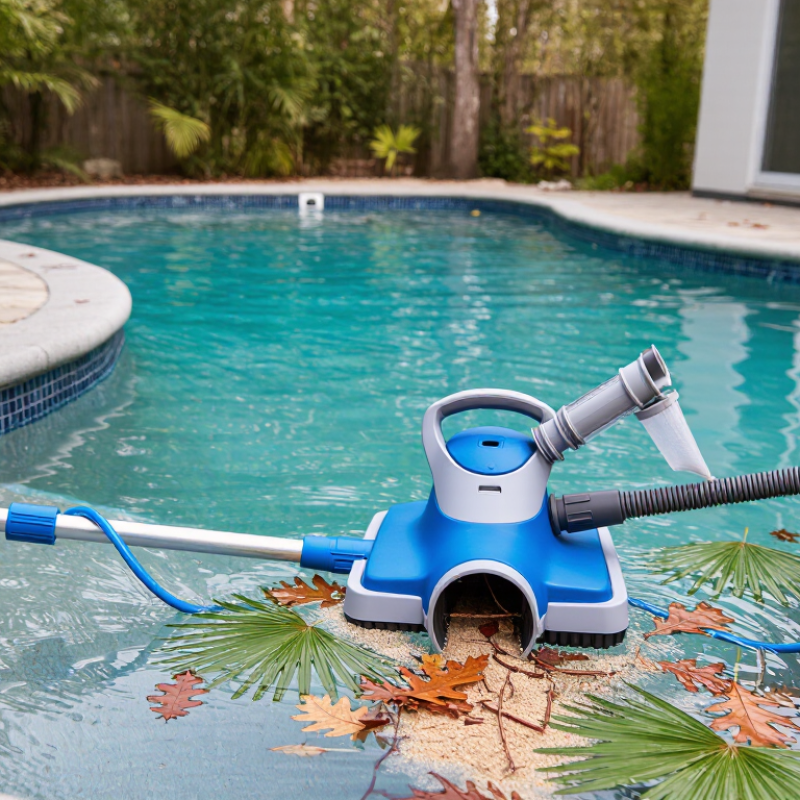
What Is the Best Top Pool Leaf Vacuum for Global Buyers?

What Is a Pool Leaf Vacuum and How Does It Work?

What Is a Pool Leaf Vacuum and How Does It Work?

A pool leaf vacuum removes leaves, insects, and loose debris from submerged pool surfaces. It usually combines a water-powered suction head, a collection bag, and a telescopic pole. As water moves through the vacuum, suction pulls debris into the bag. The cleaner water returns to the pool or passes through the equipment, depending on the design.

In practical use, guide the vacuum slowly across the floor. Fast movements can scatter leaves before they enter the intake. A full bag also reduces suction, so empty it before it becomes heavy. Pool shape, water depth, and debris type affect performance. A mesh bag may handle dry leaves well, while fine particles can pass through. This is where many buyers misjudge the product. I once assumed stronger suction always meant better cleaning, but excessive flow can disturb settled dirt.

Tips: Check the pole length, bag capacity, and connection type before buying. Global buyers should confirm hose fittings and replacement-bag availability in their region. Rinse the vacuum after use, especially when leaves contain mud or small stones. Inspect seams and wheels regularly. A simple test helps: place the head over a few leaves and move it steadily. If debris escapes from the sides, adjust the angle or reduce your speed. Not every vacuum works equally well on rough surfaces.

Which Pool Leaf Vacuum Types Suit Different Cleaning Needs?

A pool leaf vacuum should match the debris, pool size, and cleaner’s working style. A manual leaf rake suits small pools, light surface litter, and owners who prefer direct control. Its wide mesh bag captures leaves quickly, but repeated lifting can strain the shoulders. I underestimated this on a windy afternoon; the pool looked clean, yet the bottom still held wet leaves.

Battery-powered handheld vacuums work well for steps, corners, and small piles on the pool floor. Choose one with a sealed motor, a washable filter, and enough runtime for the entire pool. They are quiet and convenient. However, fine sand can block weaker filters, so checking the filter during use matters. Short poles may also force awkward bending.

For heavy seasonal debris, a hose-powered leaf vacuum with a large collection bag can be more practical. It reduces manual lifting and handles several layers of leaves, especially in larger pools. The hose connection must fit securely, or suction will fall during cleaning. Robotic cleaners suit routine maintenance and fine particles, but many models struggle with oversized leaves or long twigs. Remove large debris first. That extra step feels inefficient, but it often prevents clogging and saves cleaning time. Pool depth, water temperature, storage space, and available charging time should also influence the choice.

How to Compare Suction Power, Filtration, and Debris Capacity

What Is the Best Top Pool Leaf Vacuum for Global Buyers?

The best pool leaf vacuum is not always the strongest model. Compare suction power, filtration, and debris capacity together. Suction should be measured in kPa, cubic metres per hour, or litres per minute. These figures are more useful than vague claims like “extra powerful.” The 2023 CDC Model Aquatic Health Code links effective pool operation to correct circulation and filtration turnover. A powerful vacuum still performs poorly when its filter clogs quickly.

Filtration quality matters near trees. A fine mesh can capture small seeds, while a coarse basket handles wet leaves with less resistance. Check whether the filter can be removed without tools. Debris capacity should match the pool’s surroundings. A small basket may need emptying several times after one windy night. Industry maintenance guidance from the Pool & Hot Tub Alliance stresses regular inspection of baskets, hoses, and circulation components. That practical detail is easy to overlook.

Tips: Test the vacuum in shallow water first. Watch the water flow, hose stability, and filter loading. Choose a larger debris chamber for heavily planted gardens. For international buyers, verify voltage, replacement-filter availability, and metric specifications. Published airflow data can also be inconsistent, so compare test conditions carefully. I would not trust suction numbers alone; real performance changes with hose length, water depth, and leaf moisture.

What Features Matter for Global Buyers and Pool Conditions?

What Is the Best Top Pool Leaf Vacuum for Global Buyers?

Global buyers should judge a pool leaf vacuum by conditions, not advertising claims. The CDC’s Model Aquatic Health Code emphasizes effective circulation, filtration, and routine debris removal in public aquatic facilities. A useful vacuum should collect wet leaves without blocking quickly. Fine mesh matters for pollen and sand. A wide intake helps with heavy debris.

Energy use also deserves attention. ENERGY STAR reports that certified variable-speed pool pumps can use up to 65% less energy than standard models. This figure concerns pumps, not leaf vacuums, but it highlights an important buying lesson: suction power alone is not efficiency. A controllable motor, long battery life, and replaceable filters can reduce repeated cleaning. Shorter charging times help in humid climates. Still, battery claims often depend on testing conditions.

Pool surfaces vary widely. Smooth tiles need soft brushes, while rough plaster may require stronger wheels and flexible skirts. Saltwater areas demand corrosion-resistant materials, especially around shafts, clips, and charging contacts. Buyers should check voltage compatibility, metric hose fittings, IP protection, and local replacement-part access. A large debris bag sounds practical, yet it can become heavy and awkward near a deep end. I would choose balance over maximum capacity. No specification sheet can fully predict performance in muddy water, steep slopes, or dense autumn leaves. A small local test remains worthwhile.

What Is the Best Top Pool Leaf Vacuum for Global Buyers? - What Features Matter for Global Buyers and Pool Conditions?
Vacuum Category Best Pool Conditions Typical Debris Capacity Typical Runtime or Use Time Cleaning Performance Important Features Main Limitations Best Choice For
Cordless Robotic Leaf Vacuum Large in-ground pools, flat floors, moderate to heavy leaf fall, and frequent autonomous cleaning. Approximately 4–8 L in a reusable debris basket, depending on the design. About 60–180 minutes per charge; charging commonly takes 3–6 hours. Strong coverage on flat surfaces and effective removal of leaves, insects, and loose surface debris. Automatic navigation, rechargeable battery, large filter basket, water-resistant controls, and scheduled cleaning. Higher purchase cost; performance may decrease on steep slopes, steps, drains, or heavily textured surfaces. Buyers seeking the least manual labor for medium and large pools.
Rechargeable Handheld Pool Vacuum Small to medium pools, spas, steps, shallow areas, and spot cleaning after storms. Approximately 0.5–2 L, with a compact removable collection chamber. About 30–90 minutes per charge; charging commonly takes 3–8 hours. Good control for corners, steps, ladders, and concentrated leaf piles. Lightweight handle, interchangeable heads, washable filter, battery-level indicator, and quick-empty debris chamber. Requires manual operation and may need several passes in a large pool or after heavy leaf fall. Buyers who prioritize portability, simple operation, and lower storage requirements.
Pressure-Side Leaf Vacuum Pools with a compatible return-line pressure connection and regular leaf accumulation. Approximately 10–20 L in a large external bag or collection container. Continuous operation while the pool circulation system is running. Very effective for collecting floating and settled leaves over broad areas. Large-capacity bag, durable wheels, quick-release fittings, and compatibility with common pressure connections. Requires a suitable pool pump or booster system; pressure can increase operating energy use. Large outdoor pools surrounded by trees where high debris capacity matters most.
Skimmer-Basket Leaf Vacuum Pools with a standard skimmer opening and a functioning circulation pump. Approximately 5–15 L, depending on the external basket or bag design. Continuous operation through the pool filtration system. Effective for surface leaves and light debris when water circulation is adequate. Simple installation, large debris basket, transparent inspection cover, and easy basket removal. Less effective when the skimmer is blocked, water level is low, or the circulation pump has limited flow. Users who want a low-maintenance solution integrated with existing pool equipment.
Manual Leaf Rake with Telescopic Pole Any pool type, including irregular shapes, steps, slopes, and pools without electrical access. Typically 5–15 L per collection cycle, depending on the net size and debris load. Unlimited use; performance depends on the operator. Excellent for fast removal of large leaves before they sink or become waterlogged. Deep fine-mesh net, reinforced frame, corrosion-resistant pole, and swivel connection. Labor-intensive and unable to provide autonomous or suction-based cleaning. All global buyers needing a reliable backup tool during storms or power interruptions.
Suction Pool Vacuum with Leaf Canister Pools with an existing suction line or skimmer vacuum connection and moderate debris levels. Approximately 2–8 L in an external leaf canister. Continuous operation while connected to the pool pump. Suitable for settled leaves, fine debris, and routine floor cleaning. Transparent canister, universal hose connections, adjustable suction control, and replaceable mesh filter. Large leaves may clog the hose or canister; performance depends on pump flow and hose condition. Owners who already have compatible suction equipment and want a versatile cleaning setup.
Global buying checklist: Confirm the local charging standard, battery certification, water-resistance rating, replacement-filter availability, hose and connector compatibility, pool-surface suitability, warranty coverage, and shipping restrictions for lithium batteries. For pools in tropical or storm-prone areas, prioritize a large debris basket, corrosion-resistant materials, quick emptying, and a manual leaf rake as a backup.

How to Choose, Use, and Maintain the Best Pool Leaf Vacuum

Choosing the best pool leaf vacuum starts with your pool’s actual conditions. Measure its surface, depth, and common debris load. A small hand vacuum may suit a compact pool, while larger pools need wider suction heads and longer poles. Look for a durable mesh bag, stable wheels, and a pole connection that fits standard equipment. For battery models, check charging requirements and water-resistance instructions before buying. Global buyers should also confirm voltage compatibility and local replacement-part access. These details often matter more than appearance.

Use the vacuum slowly, keeping the head close to the pool floor. Fast movements can scatter leaves and cloud the water. Empty the collection bag when it reaches about two-thirds capacity. Heavy wet leaves reduce suction quickly. I once rushed this step and spent extra time clearing the same corner again. Follow the operating manual, especially around electrical connections. Keep chargers away from splashing water, children, and damp storage areas.

Maintenance protects suction and extends service life. Rinse the bag, wheels, pole joints, and intake area after each use. Remove small twigs before they block the opening. Let washable parts dry fully before storage. Inspect seals and clips for cracks every few weeks. I still find that routine cleaning is easy to postpone, but neglected debris becomes harder to remove later. Store the vacuum in a shaded, ventilated place, not under direct sunlight.