413 Central Ave, N Faribault, MN 55021 | 507-334-7114 | Hours: Tuesday-Friday 9am - 5:30pm & Saturday by appointment

China’s menstrual care industry is gaining attention from distributors, retailers, and private-label buyers worldwide. UNFPA reports that approximately 1.8 billion people menstruate each month, highlighting the scale of this essential-care market. Reusable products also support waste-reduction goals, although their real environmental benefit depends on cleaning, product life, and user habits.
Market research firms, including Grand View Research and Fortune Business Insights, forecast continued growth in the global menstrual cup market. Their estimates differ because product definitions and regional data vary. That difference matters. A market-size figure should guide research, not replace it.
This guide examines leading Menstrual Cup Brands in China through a buyer-focused lens. It considers material transparency, mold quality, cup firmness, capacity, packaging, certifications, and export experience. A small production detail can matter. For example, a rough rim may affect comfort, while unclear silicone documentation can delay buyer approval.
Reliable evaluation requires more than attractive product photos. Global buyers should request current test reports, factory audit records, batch traceability, and clear instructions for use. Relevant standards may include biocompatibility testing and applicable food-contact or medical-product requirements, depending on the destination market. Compliance is never automatic.
Some brands may appear strong online but provide limited evidence behind their claims. That deserves careful reflection. Supplier communication can also reveal practical experience, from answering sizing questions to explaining quality-control procedures. Not every “premium” label means premium manufacturing.
The following overview compares promising Chinese manufacturers and brands for international sourcing. It does not present one universal winner. Buyer priorities differ across retail, healthcare, and private-label channels.
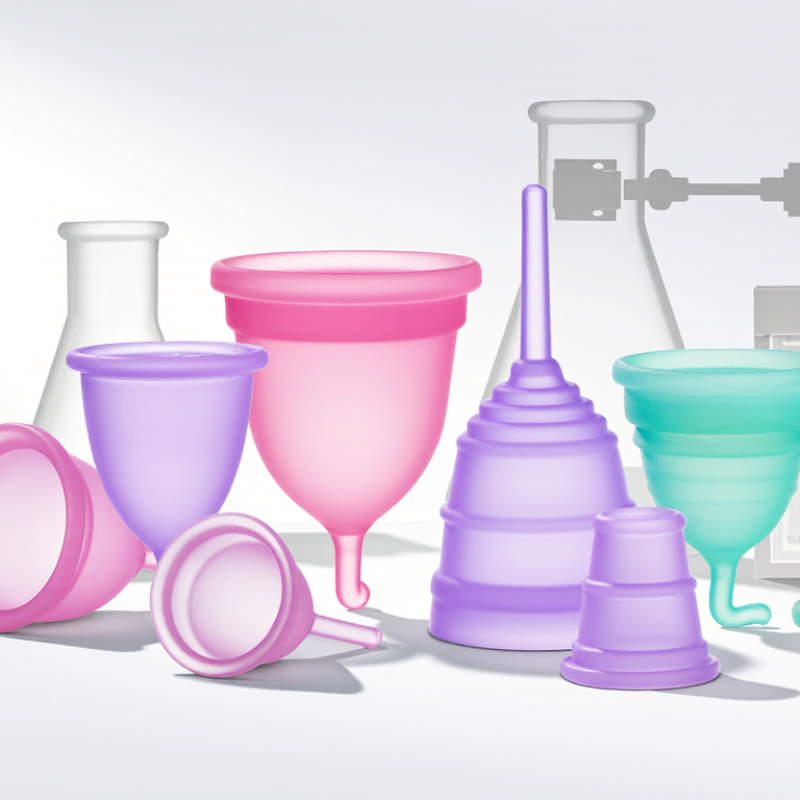
Menstrual cups are reusable internal products, so material selection deserves careful review. Medical-grade silicone is common because it is flexible, durable, and generally easy to clean. Some products use thermoplastic elastomers or rubber-based materials. Buyers should request material specifications, colorant information, and evidence of skin or mucosal safety. “Medical grade” alone is not enough.
Size affects comfort, leakage control, and removal. A smaller cup may suit younger users or those with a lower cervix, while a larger model can offer greater capacity. However, age-based sizing is only a rough guide. Cervix height, pelvic-floor strength, flow volume, and personal experience matter more. Measure carefully. A rigid cup may open quickly but feel uncomfortable, while a softer cup may need more folding practice.
ISO 3533:2021 addresses design, safety, and performance requirements for menstrual products worn internally. For global buyers, supplier assessments should examine dimensions, capacity, flexibility, surface finish, packaging, instructions, and foreseeable misuse. Testing should support cleanliness, material safety, and product performance under intended use. ISO alignment does not automatically equal market approval in every country. That distinction is often overlooked. A factory may provide attractive test reports, yet weak traceability or unclear sampling can reduce confidence. Buyers should verify report scope, laboratory competence, batch identification, and post-production controls before placing large orders.
Menstrual cup size labels are not globally standardized. The chart shows typical usable-capacity ranges commonly published for small, medium, and large cups; actual capacity depends on shape, length, diameter, and stem design.
Most reusable menstrual cups are made from medical-grade silicone, while thermoplastic elastomers and natural rubber latex are also used. ISO 3533:2021 addresses safety and performance considerations, including design, materials, physical characteristics, user instructions, warnings, and relevant testing. The standard does not create one universal size system or guarantee compliance based on material alone.
The strongest buying decisions begin with evidence, not packaging claims. A Lancet review examined 43 studies involving 3,319 users across different countries and income settings. Its findings suggested menstrual cups can provide leakage protection comparable to disposable products for many users. However, comfort and successful use depended on correct sizing, insertion, removal, and cleaning.
This matters to global buyers. A reliable supplier should provide clear instructions, medical-grade material information, size guidance, and documented quality-control procedures. Packaging should explain cleaning steps, storage, replacement advice, and when to seek medical help.
Small details matter. A smooth rim can affect comfort. A firm stem can affect removal. Users also need realistic guidance during the first two cycles.
The evidence is encouraging, but it is not perfect. I would not treat 43 studies as 43 equally strong trials. The review included varied methods, limited long-term data, and relatively few direct comparisons. Some users reported an adjustment period, leakage, or difficulty during removal. These limits deserve honest communication. Global buyers should request test records, traceable production information, and user feedback from different body types and experience levels. A low price alone proves very little.
Chinese menstrual cup manufacturers increasingly serve global buyers through OEM and private-label programs. Their strongest advantage is flexible production. A capable factory can adjust cup firmness, stem length, colors, packaging, and mold design.
Buyers should ask about silicone grade, molding controls, clean-room practices, and batch traceability. Sample approval matters more than attractive catalogs. The first sample may feel too firm or show uneven trimming.
Certifications require careful checking. Request current ISO 13485 or ISO 9001 certificates, laboratory test reports, material declarations, and market-specific compliance documents. Certification scope should match the actual factory and product.
A certificate PDF alone proves little. Verify the issuing body, validity dates, factory address, and covered processes. Requirements differ across markets, so importers should confirm local rules with qualified regulatory advisors.
I would not rely on a supplier’s general statement that a product is “globally certified.”
Export experience is another useful measure of reliability. Review shipping records, destination markets, packaging languages, and experience with customs documentation. Established exporters usually understand carton labeling, commercial invoices, inspection procedures, and Incoterms.
Ask for references where possible, but protect confidential information. Their export footprint may look impressive, yet small trial orders can reveal delays, communication gaps, or inconsistent quality. That is worth testing.
A realistic supplier should explain minimum order quantities, tooling costs, lead times, corrective actions, and after-sales support without avoiding difficult questions.
Global buyers comparing China-made menstrual cups should inspect compliance evidence, not just logos on a brochure. For the United States, ask whether the product follows the applicable FDA pathway, including establishment registration, device listing, labeling, and required quality controls. FDA registration alone does not prove product clearance or performance. In Europe, CE marking under the EU MDR should connect to technical documentation, risk management, clinical evaluation, and a valid conformity assessment. REACH review is also important, especially for pigments, packaging, and substances of very high concern. Request recent test reports, material declarations, and traceable batch records.
Commercial terms can change the real cost quickly. Typical private-label MOQs may range from 500 to 3,000 units, while custom colors, molds, or printed cartons often raise the minimum. Indicative ex-works pricing may fall between 1.20 and 4.50 US dollars per cup, depending on silicone grade, packaging, inspection, and order volume. Treat these figures carefully. A low quote may exclude testing, freight, tooling, or corrective work. Ask for a line-by-line quotation.
Sample production often takes 7 to 14 days. Bulk production may require 30 to 60 days after approval and deposit. Add time for independent laboratory testing and shipping. I have seen schedules fail because artwork changed late. Build approval checkpoints into the purchase contract. Confirm defect limits, replacement terms, inspection standards, and document validity before payment. Some suppliers communicate well but cannot provide consistent evidence. That gap deserves attention.
| Anonymous Supplier Profile | Typical Product Configuration | FDA Readiness for the U.S. Market | EU MDR Readiness | REACH Documentation | Indicative MOQ | Indicative FOB Price | Typical Lead Time |
|---|---|---|---|---|---|---|---|
| Profile A — Established Export Manufacturer Experience with private-label medical and personal-care products. | Medical-grade silicone cup 2 sizes, standard colors Individual retail box and cotton pouch | Documentation available Can generally provide material specifications, biocompatibility reports, labeling files, and U.S. regulatory support documents. Buyer should confirm the applicable FDA product classification and submission route before import. | Project dependent Technical documentation can usually be prepared, but the importer or EU responsible economic operator must verify classification, conformity assessment, labeling, and post-market obligations under Regulation (EU) 2017/745. | Commonly available Silicone and colorant declarations, restricted-substance statements, and SVHC-related information can typically be requested. Obtain a current declaration for each material and color. | 1,000–3,000 pieces | US$1.20–2.20 per piece | 25–40 days after artwork and sample approval |
| Profile B — OEM/ODM Silicone Specialist Strong focus on tooling, custom sizes, and color matching. | Platinum-cured silicone cup Custom firmness and stem options Custom molded logo | Verify before purchase May supply test reports and a declaration of materials, but FDA market-entry documentation is often dependent on the buyer's intended claims, labeling, and distribution model. | Technical file support Product specifications and risk-management inputs may be available. The buyer must confirm whether the product is a medical device in the target EU market and complete the required conformity process. | Usually available Request REACH declarations for silicone, pigments, packaging inks, adhesives, and any metal components. Do not rely only on a general factory statement. | 2,000–5,000 pieces | US$1.50–3.00 per piece | 35–55 days, including tooling when required |
| Profile C — High-Volume Contract Factory Optimized for repeat orders and large retail programs. | Standard medical-grade silicone cup 1–3 standard sizes Bulk packing or basic retail packaging | Buyer-led compliance Competitive manufacturing capacity, but the importer normally needs to control the regulatory strategy, U.S. labeling, establishment responsibilities, and product documentation. | Buyer-led compliance Factory quality records may support the technical file. EU conformity, authorized representation, labeling, and registration responsibilities must be assigned contractually. | Routine declarations Batch and material declarations are commonly available for regular materials. Confirm that the documents cover the exact formulation and colorway supplied. | 5,000–10,000 pieces | US$0.85–1.60 per piece | 20–35 days for repeat orders |
| Profile D — Small-Batch Private-Label Supplier Suitable for pilot launches, online sellers, and market testing. | Standard silicone cup Limited colors and sizes Generic packaging with label customization | Limited support Basic material and safety documents may be available. Confirm whether the supplier can support the buyer's intended FDA pathway and provide consistent production records. | Additional verification needed The buyer may need an independent regulatory consultant or testing laboratory to complete classification, conformity, and technical documentation. | Basic statements Ask specifically for current REACH and SVHC documentation rather than relying on a generic “non-toxic” claim. | 300–1,000 pieces | US$2.00–4.00 per piece | 15–30 days for standard stock; 30–45 days for custom packaging |
| Profile E — Premium Compliance-Oriented Manufacturer Focused on traceability, testing, and international market documentation. | Platinum-cured silicone cup Multiple sizes and firmness levels Serialized or batch-traceable packaging | Strong documentation package More likely to support supplier audits, quality agreements, traceability, biocompatibility evidence, and controlled labeling. Buyer remains responsible for confirming the final U.S. regulatory obligations. | Structured technical support May provide risk-management files, test reports, quality-system records, and conformity documentation inputs. The legal manufacturer and EU economic-operator responsibilities must still be clearly defined. | Detailed material package Can typically provide declarations for silicone, pigments, packaging, and restricted substances, subject to product-specific confirmation and document validity. | 1,000–3,000 pieces | US$2.20–4.50 per piece | 40–60 days for new projects; 25–40 days for repeat orders |
| Profile F — Trading Company with Factory Network Offers sourcing flexibility across several production partners. | Standard or semi-custom silicone cup Flexible packaging options Factory selected by order requirements | Documents vary by factory Request the actual manufacturer's name, test reports, production address, batch records, and evidence that the supplied documents match the selected factory and product. | Confirm legal roles Ensure that the technical documentation, declarations, labeling, and quality records are issued for the actual manufacturer rather than only by the trading company. | Factory-specific REACH declarations may differ by formulation, pigment, packaging, and production site. Review the documents before approving the purchase order. | 500–2,000 pieces | US$1.40–3.20 per piece | 25–45 days after factory confirmation |
A reliable sourcing process begins with evidence, not attractive samples. Ask each manufacturer for recent test reports covering material identity, biocompatibility, dimensions, odor, and tear resistance. Use an independent laboratory when product claims affect market approval. Verify whether testing matches the destination market’s current requirements. Do not guess.
Packaging deserves equal attention. Check that every unit has clear instructions, storage guidance, warnings, lot numbers, and production dates. Multilingual artwork should be reviewed by a qualified translator. Inspect tamper-evident seals and carton strength through simulated shipping. A beautiful box cannot repair poor hygiene control or confusing usage information.
Tips: Request a traceability sample before placing a large order. The supplier should connect raw material lots, molding records, inspections, packaging dates, and shipment details. Also request after-sales data, including complaint rates, return reasons, response times, and corrective actions. In practice, records are sometimes incomplete. That weakness deserves attention, not polite excuses. Compare batch data with physical inspections, customer feedback, and factory audit findings. Keep evidence. A dependable supplier should explain deviations clearly, preserve records, and improve procedures after recurring complaints. A signed checklist helps, but ongoing verification matters more.