Top Engagement Ring Manufacturers in China
China’s engagement ring manufacturers serve retailers, designers, and couples seeking varied styles and production options. But a polished catalog tells only part of the story. Details matter. Buyers should compare metal choices, stone-setting precision, customization support, quality checks, and communication before choosing a supplier. Frances Gerety, the advertising copywriter whose slogan helped shape modern diamond-ring marketing, wrote, “A Diamond is Forever.” The line is memorable, though a durable ring depends on more than sentiment. It also depends on careful workmanship and clear product information.
This guide introduces leading engagement ring manufacturers in China and explains what to assess when comparing them. Look for specific details: ring-size tolerances, setting options, sample policies, material specifications, and documented inspection procedures. Ask how design revisions are handled and whether production samples match the final order. A supplier’s response can reveal as much as its portfolio. Still, online claims alone are not proof of consistent quality. Request clear specifications and examine finished pieces closely. A small setting flaw may be difficult to see in a bright product photo. That is worth remembering. The manufacturers featured here offer a starting point, not a substitute for independent checks. Some buyers may prioritize custom design; others may value reliable repeat production. The right choice depends on the project, budget, and expectations—and those expectations should be stated plainly.
Overview of China’s Engagement Ring Manufacturing Industry
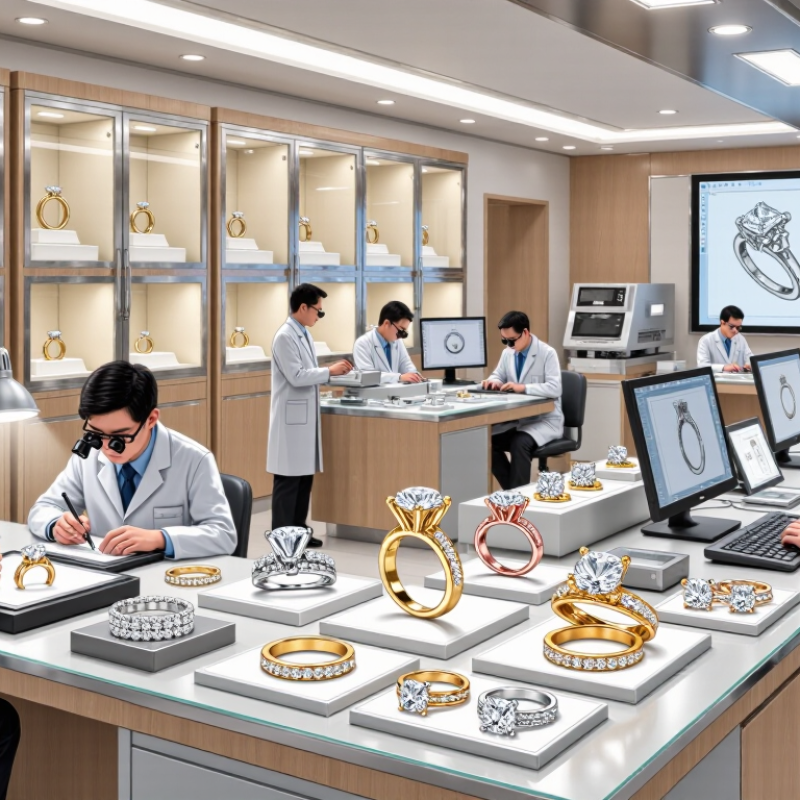
China’s engagement ring manufacturing industry brings together specialist workshops and larger production facilities. Many suppliers coordinate design, prototyping, casting, stone setting, polishing, and final inspection. A round solitaire may pass through several skilled hands before completion. Details matter. Buyers compare setting strength, stone security, finish consistency, and measurements—not only price.
Digital design tools make revisions easier. CAD models help assess prong height and band proportions before casting, while physical samples reveal comfort and balance. Orders may involve different precious-metal alloys and either lab-grown or mined stones, depending on the supplier. Buyers can request written specifications, material documentation, and inspection records. Fit matters, too.
Capabilities vary widely. Some workshops suit small custom batches; others focus on consistent, repeatable production. Communication between design and quality teams can be uneven, and schedules may shift when stones are unavailable or designs change. Not always predictable. Reviewing sample workmanship, response times, quality procedures, and after-sales support gives buyers a fuller picture than a catalogue alone.
China’s Gold Jewelry Market: Annual Consumption
A market-level indicator relevant to China’s engagement-ring manufacturing industry.
China’s gold jewelry consumption rose to 706.48 tonnes in 2023 before falling to 532.02 tonnes in 2024. These figures show broader jewelry-market demand; they are not engagement-ring-specific sales or manufacturing output.
Source: China Gold Association, annual gold consumption reports. Values are in tonnes.
How Engagement Rings Are Designed and Made in China
A Chinese engagement ring usually begins with a design brief: stone shape, metal, budget, and how the ring should feel on the hand. Designers turn these details into a CAD model, checking band width, setting height, and prong placement. A resin or wax sample can reveal awkward proportions before production. Small details matter. Yet a digital model cannot show every snag against clothing or every comfort issue.
The production sequence often includes casting, cleaning, stone setting, polishing, and final inspection. At the bench, setters secure each stone under magnification; inspectors check prong alignment, surface finish, and measurements against the approved design. Independent gem reports can document a center stone’s characteristics, while metal testing helps verify composition. Practices vary by workshop, so buyers should ask what checks are included.
The World Gold Council’s Gold Demand Trends: Full Year 2024 reported global gold jewellery demand of 1,877.1 tonnes, down 11% from 2023. That figure covers all gold jewellery, not engagement rings alone, but it shows how material costs and consumer demand can shape design choices.
A slimmer band may save metal, though it can feel less substantial. That trade-off deserves a real sample, not just a polished render.
Criteria for Comparing Engagement Ring Manufacturers
When comparing engagement ring manufacturers in China, look beyond catalog photos and quoted prices. Ask whether the supplier can provide documentation for metal fineness, gemstone grading, and order specifications. Request a CAD rendering, then inspect a physical sample for prong symmetry, clean joins, and an even polish. Small flaws matter. A stone that shifts under gentle pressure, or a band that feels sharp inside, may point to weak finishing or inspection.
Compare quality-control steps, not just claims. Ask how measurements are checked, whether each ring is inspected before packing, and what happens if a setting fails inspection. Request written timelines for sample approval, production, and shipping; vague estimates make planning harder. Clear answers about revisions and tolerances are more useful than polished sales language. Where possible, review recent work in the same metal color and setting style you need. One sample cannot prove consistent production, though it can reveal how carefully details are handled. I would not treat the lowest quote as the best value; hidden rework costs are easy to underestimate.
Profiles of Leading Engagement Ring Manufacturers in China
China’s leading engagement-ring manufacturers differ less by showroom style than by production control. Integrated factories often combine CAD design, wax printing, casting, stone setting, and polishing under one roof. This can shorten revision cycles. But an impressive sample is not proof of consistent batch quality.
Specialist workshops may focus on hand setting, fine pavé, or custom-fit bands. Ask how they check prong symmetry, stone security, and ring dimensions after polishing. Request a production sample and a written inspection record. Small details matter. One limitation: public factory profiles rarely reveal rejection rates, so buyers should verify claims directly.
Market data also shapes these manufacturers’ choices. The World Gold Council’s Gold Demand Trends: Full Year 2024 reported Chinese gold jewellery demand at about 479 tonnes, down 24% year on year. That figure covers gold jewellery, not engagement rings alone. Still, it signals pressure to use materials carefully. Export-oriented producers may offer lighter settings, made-to-order sizing, and CAD previews to reduce waste and costly remakes. Ask whether metal weight, stone specifications, and final measurements appear on the order sheet. A clear process is reassuring; it is not infallible.