What Are the Top Types of Mens Jewelry?
Men’s jewelry has moved beyond a single watch or wedding band. Today, a chain at the collar, a signet ring, or a slim bracelet can shape an outfit without overwhelming it. The right piece often feels personal. The wrong one can look like it arrived from another wardrobe.
Industry data offers useful context, though it does not dictate personal style. Grand View Research valued the global jewelry market at USD 353.26 billion in 2023 and projected continued growth through 2030. That figure covers jewelry broadly, not mens jewelry alone. Still, it reflects the scale of a category where design, materials, and buying habits keep changing. Menswear designer Tom Ford has said, “Dressing well is a form of good manners.” Applied to jewelry, that idea suggests care, not excess. Small details matter.
This guide looks at the most recognizable types of mens jewelry, from watches and rings to chains, bracelets, earrings, and cufflinks. It considers what each piece does, how it feels in everyday wear, and which details deserve a closer look. A heavy chain may suit one person and distract on another. There is no universal formula, and trends can be poor advice when they ignore comfort or personal taste. The aim is practical: understand the options, then choose pieces that feel considered rather than collected for show.
Men’s Rings: Common Styles, Materials, and Uses
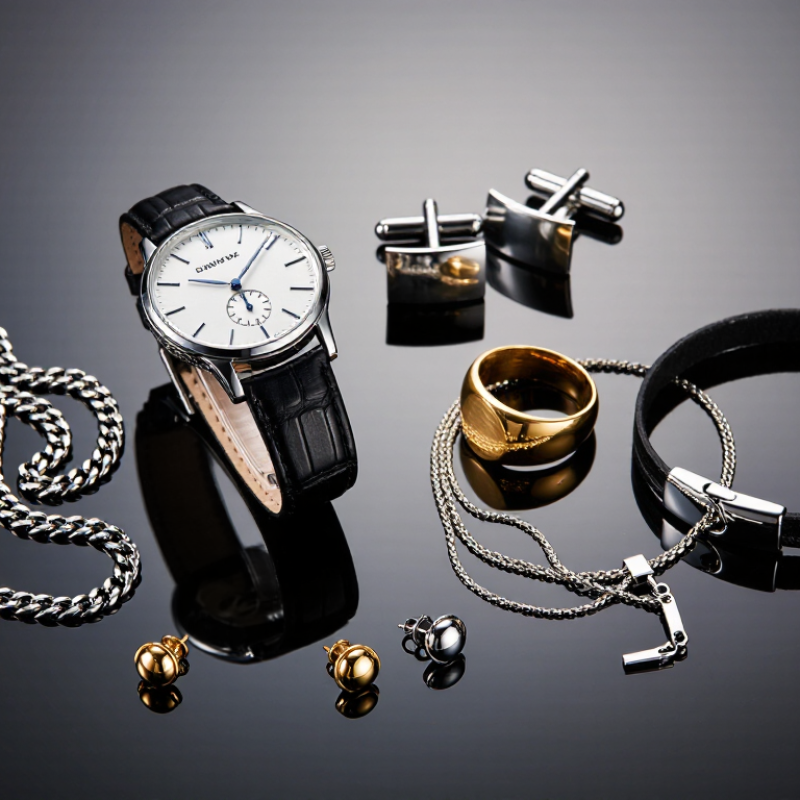
Men’s rings serve different purposes, from daily wedding bands to expressive signet rings. A plain band offers a low-profile fit for work and frequent hand use. Signet rings often feature a flat face, sometimes engraved with a personal symbol. Wider statement bands are more visible, but can feel bulky beside a keyboard or tool handle. Class rings mark a school connection; wedding bands signal a personal commitment. Fit matters.
Material changes both appearance and upkeep. Gold is warm and can be resized by a skilled jeweler, though softer alloys may show scratches. Platinum has a naturally pale finish and substantial feel; sterling silver is lighter on the budget but may tarnish. Titanium and tungsten carbide are hard-wearing choices, yet resizing options can be limited, so check before buying. The World Gold Council’s Gold Demand Trends: Full Year 2024 reported 1,877 tonnes of global gold-jewellery demand, down 11% year over year. That figure covers all gold jewellery, not men’s rings specifically, so it offers market context rather than a direct style forecast. A practical detail is often missed: measure the finger at different times of day, since heat and activity can change the fit. Even careful sizing is imperfect. A comfortable ring should move over the knuckle with mild resistance, not leave a deep mark.
Men’s Ring Materials: Approximate Mohs Hardness
Hardness is one factor to consider when choosing a ring: harder materials generally resist scratching better, while softer precious metals are easier to resize and repair. Values shown are approximate midpoints of commonly cited ranges; actual hardness varies by alloy and material grade.
Men’s Necklaces and Chains: Designs and Lengths
Men’s Necklaces and Chains: Designs and Lengths
Men’s necklaces work best when design, length, and clothing feel balanced. Curb chains have flat, linked surfaces that sit neatly over a T-shirt. Rope chains add texture, while box chains create a clean, geometric line. For understated wear, a slim chain often layers more easily than a heavy one. A pendant needs enough space to move without catching on a shirt collar.
Length changes the whole look. An 18-inch chain usually sits near the base of the neck; 20 inches commonly rests around the collarbone. Chains measuring 22 to 24 inches tend to fall lower on the chest. These are useful starting points, not rules: neck size, body proportions, and pendant weight all affect the fit.
Grand View Research estimated the global men’s jewelry market at USD 5.3 billion in 2023 and projected 8.4% annual growth through 2030. That signals expanding interest, but it cannot tell anyone which length will feel comfortable.
Tips
Measure a necklace you already like, laid flat from clasp to end. Try the intended chain over the actual neckline. Check that a pendant stays centered when you move. Small details matter. I still find length charts a little too neat; real bodies and personal preferences rarely are.
Men’s Bracelets: Cuffs, Bangles, and Link Styles
Men’s bracelets work best when their shape suits the wrist and the setting. Cuffs are open-ended, easy to slip on, and often look clean beside a watch. Leave a little room at the opening; a tight cuff can pinch when the wrist bends. Bangles are closed circles, so measure the hand as well as the wrist before buying. A polished bangle catches light sharply, while a brushed finish feels quieter. Link bracelets offer more movement and adjustable fit, though larger links can feel heavy during a long day. Small details matter.
The scale of the wider market offers context, not a men-specific forecast: Grand View Research valued the global jewelry market at $353.26 billion in 2023 and projected 4.7% annual growth from 2024 to 2030. That figure includes many jewelry categories, so it should not be read as a measure of men’s bracelet sales. For daily wear, compare weight, clasp security, and skin comfort; nickel-sensitive wearers should check material disclosures. A slim steel cuff may sit neatly under a sleeve, while a leather-and-link design can snag knitwear. Personal style varies. And trends can mislead. A bracelet that looks striking in a product photo may feel awkward after several hours, so fit deserves a real-world check.
Men’s Earrings: Studs, Hoops, and Other Forms
Men’s earrings can change the feel of an outfit without demanding much attention. Studs are a practical starting point: a small metal sphere or flat disc sits close to the earlobe and works with both casual shirts and tailored jackets. Choose a size that feels balanced against your face, rather than assuming the smallest option is always best. Fit comes first. A backing that presses too tightly can become uncomfortable during a long day.
Hoops bring more movement and visibility. Slim, small hoops tend to look understated, while wider or larger circles create a stronger focal point. If you wear glasses or have prominent facial features, compare the earring’s shape and scale in a mirror; proportions can feel different than they look in a product photo. Some men wear one hoop, others choose a pair. Neither choice is inherently more polished.
Other forms include small huggie hoops, ear cuffs, and short drop earrings. For regular wear, check that the post or ring feels smooth and secure, and consider materials such as titanium or sterling silver if you know your skin reacts to certain metals. Small details matter. I still think an earring can look good on its own, but comfort is easy to underestimate. Try a piece for a few hours before making it part of your daily routine. A little trial and error helps.