413 Central Ave, N Faribault, MN 55021 | 507-334-7114 | Hours: Tuesday-Friday 9am - 5:30pm & Saturday by appointment

Choosing a birthstone charm bracelet in 2026 involves more than matching a month to a color. It combines personal meaning, wearable design, gemstone care, and responsible purchasing. The strongest styles reflect current preferences for customization without losing everyday comfort. A slim gold-tone chain may suit office wear, while a mixed-metal bracelet can feel more expressive. Some designs feature one polished stone, and others hold several charms for family birthdays or personal milestones. The difference can be surprisingly practical.
This guide explores the leading birthstone charm bracelet types expected to attract attention in 2026. It considers personalized name charms, minimalist single-stone designs, layered bracelets, zodiac-inspired combinations, and adjustable pieces for changing wrist sizes. Each category has advantages and limitations. Natural gemstones can show charming variations, but their color may differ from online photographs. Lab-created stones often offer consistent appearance and accessible pricing, although shoppers should check clear product descriptions. Reputable sellers should identify materials, plating, stone origin claims, and care instructions accurately. Look for secure clasps.
Small details matter. A low-profile setting is less likely to catch on knitwear, while a heavier charm may rotate beneath the wrist. Water exposure, perfume, and harsh cleaners can dull certain finishes. This is where many style guides oversimplify the decision. A beautiful bracelet is not automatically a durable one. By comparing construction, symbolism, comfort, and maintenance, readers can choose a piece that feels personal and remains practical beyond the first impression.
What Are the 2026 Top Birthstone Charm Bracelet Types?
GIA’s 12-month gemstone guide gives each month a practical starting point. January features garnet, while February favors amethyst. March highlights aquamarine, and April includes diamond. May brings emerald, with June offering pearl, alexandrite, or moonstone. July centers on ruby. August includes peridot, spinel, and sardonyx. September features sapphire, while October offers opal or tourmaline. November includes topaz and citrine. December presents turquoise, tanzanite, or zircon. GIA does not rank these stones by popularity. It explains their identity, quality factors, and treatment concerns.
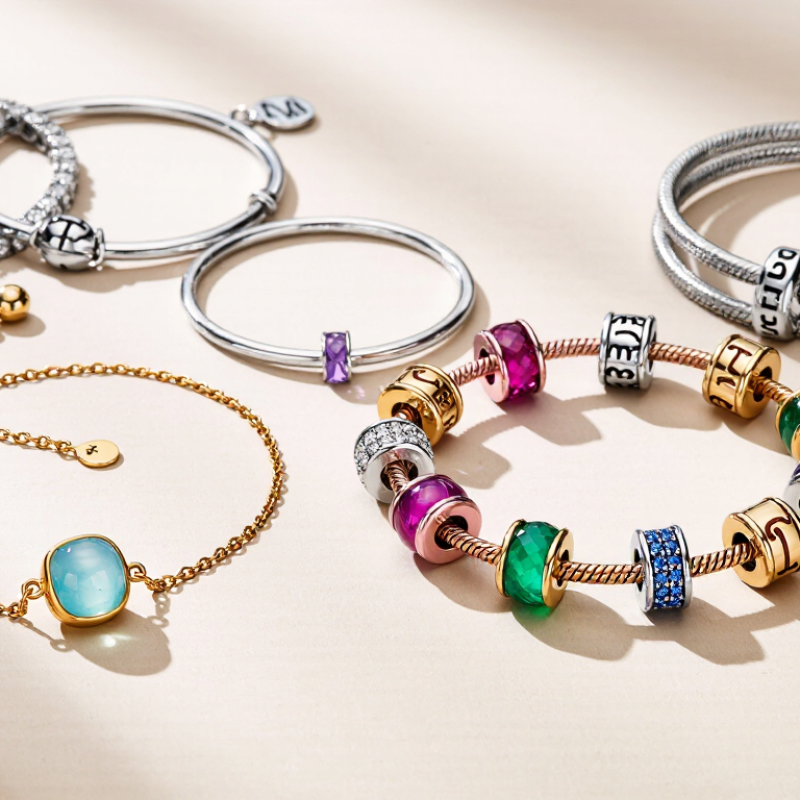
Three bracelet styles suit this guide well. A single-charm bracelet creates a clean monthly focal point. A station bracelet places small stones along a slim chain. A clustered bracelet combines family birthstones for shared celebrations. In practical wear, sapphire, ruby, and diamond resist scratches better than pearl or opal. Amethyst and citrine need careful storage, too. They can chip when struck.
The global jewelry market was valued at approximately 353.26 billion dollars in 2023, according to Grand View Research’s 2024 report. Its forecasted growth reflects stronger interest in personal, meaningful jewelry. Still, market growth does not prove every trend will last. I would choose a secure clasp, documented gemstone treatments, and a comfortable metal before chasing color trends. That judgment matters more than a polished product photograph.
What Are the 2026 Top Birthstone Charm Bracelet Types?
In 2026, birthstone charm bracelets are becoming more personal and easier to style. Stone choice remains the strongest starting point. January wearers may choose deep garnet, while September birthdays suit cool blue sapphire tones. Some stones vary in color, clarity, and durability, so visual appeal should not be the only concern. I recommend checking the stone’s setting before daily wear.
Metal changes the bracelet’s character. Sterling silver creates a bright, casual finish. Gold tones feel warmer and more traditional. Stainless steel offers practical resistance to tarnishing and frequent handling. Skin sensitivity also matters. A metal description should identify its composition clearly, rather than relying on vague phrases like “premium metal.”
Charm layout affects comfort and movement. A centered birthstone charm looks clean and balanced. Several small charms create a livelier design but may twist during wear. Alternating charms can distribute weight more evenly. I have found that overly crowded bracelets often look exciting online, yet feel heavy in real use. That is worth reconsidering. Personalization can include initials, dates, zodiac symbols, or a short engraved message. Keep the text brief. Tiny lettering may lose clarity over time. Adjustable chains help accommodate different wrist sizes, although loose bracelets can catch on clothing. A thoughtful design leaves space for future charms without making the bracelet feel unfinished.
Jewelry e-commerce is moving toward personal meaning, not only visual appeal. McKinsey and The Business of Fashion’s State of Fashion 2025 projects jewelry growth of roughly 4.5% to 5.5% annually through 2028. That momentum supports birthstone charm bracelets with modular designs, adjustable chains, and removable pendants. Customers can add a second charm after a child’s birth or mark an anniversary with a tiny engraved disc.
Customization is becoming more practical online. Grand View Research estimates the global online jewelry market will expand strongly through 2030, with personalization supporting purchase confidence. In this setting, 2026’s leading types may include month-specific gemstone bracelets, mixed-birthstone family bracelets, initial-and-stone combinations, and stackable chains with varied textures. A small garnet beside a silver-toned initial feels more personal than a crowded charm cluster. Less is useful.
E-commerce data also shows why product detail matters. Salesforce Shopping Index reports continued mobile shopping growth, making clear photography, sizing tools, and transparent gemstone descriptions essential. Yet forecasts have limits. A report may measure clicks, not emotional attachment. Some buyers still prefer imperfect stones, handwritten notes, or charms that do not match neatly. Retailers should test customization menus carefully, because too many choices can create hesitation rather than delight.
What Are the 2026 Top Birthstone Charm Bracelet Types?
Durability Guide: GIA Mohs Hardness Ratings for 12 Birthstones
Birthstone charm bracelets come in slim chains, link bracelets, and adjustable cord styles. The best choice depends on daily movement, water exposure, and how often charms touch hard surfaces. A bracelet charm may look small, but repeated impacts can create chips, loose settings, or surface scratches.
GIA’s Mohs scale measures scratch resistance, not overall strength. January garnet ranks about 6.5–7.5. February amethyst reaches 7, while March aquamarine measures 7.5–8. April diamond leads at 10. May emerald also measures 7.5–8, but its internal inclusions can increase breakage risk. June pearl is much softer, at 2.5–4.5. July ruby and September sapphire both reach 9. August peridot measures 6.5–7. October opal ranges from 5.5–6.5. November topaz measures 8, and December turquoise ranks about 5–6.
In my jewelry care experience, pearl and opal charms need the gentlest handling. Keep them away from perfumes, rough metal edges, and sudden temperature changes. A diamond charm resists scratches, yet its setting can still bend during exercise. Topaz is hard but has cleavage, so a sharp impact may split it. I once underestimated garnet’s durability, but its surface showed wear after constant contact with a metal clasp. That detail changed my advice: rotate delicate charms, inspect prongs monthly, and remove bracelets before sports or heavy work. Mohs numbers guide selection, but they do not predict every real-life accident.
| Month | Birthstone | Mohs Hardness | Durability Profile | Recommended 2026 Charm Bracelet Type | Setting and Protection | Care Guidance |
|---|---|---|---|---|---|---|
| January | Garnet | 6.5–7.5 | Moderate to good scratch resistance; some varieties can be vulnerable to chips from sharp impacts. | Bezel-set station charm or protective locket charm | A partial or full bezel helps shield the stone’s edges. | Clean with mild soapy water; avoid sudden impacts and abrasive cleaners. |
| February | Amethyst | 7 | Good everyday scratch resistance, but prolonged heat or strong light may affect some colors. | Classic prong-set dangling charm | Use rounded prongs and a protective gallery for an active bracelet. | Use lukewarm soapy water; avoid steam, ultrasonic cleaning, and high heat. |
| March | Aquamarine | 7.5–8 | Very good scratch resistance and suitable for regular wear, although impact damage is still possible. | Open-link drop charm with a secure prong setting | Four or six prongs provide visibility while retaining the stone securely. | Clean with warm soapy water; protect from hard knocks and harsh chemicals. |
| April | Diamond | 10 | Highest scratch resistance, but it can still chip along cleavage directions under a hard blow. | Low-profile bezel or flush-set charm | A low profile reduces snagging and protects exposed edges. | Clean with mild soap and a soft brush; inspect settings regularly. |
| May | Emerald | 7.5–8 | Good hardness but commonly contains inclusions, making it more vulnerable to fracture than the rating suggests. | Full-bezel heirloom charm | A bezel is preferable to exposed prongs for frequent bracelet movement. | Use only gentle soapy water; avoid ultrasonic cleaners, steam, heat, and chemicals. |
| June | Pearl | 2.5–4.5 | Soft and easily scratched; surface luster can be damaged by cosmetics, acids, and dry conditions. | Caged pearl charm or removable pendant charm | A cage or recessed design limits contact with neighboring charms. | Wipe with a soft damp cloth; put on after cosmetics and store separately. |
| July | Ruby | 9 | Excellent scratch resistance and generally well suited to active wear, though inclusions can affect toughness. | Secure prong-set or bezel-set everyday charm | Choose a low profile and reinforced bail to reduce snagging. | Warm soapy water is suitable; avoid harsh chemicals and inspect the setting. |
| August | Peridot | 6.5–7 | Moderate hardness; more susceptible to scratches and impact chips than sapphire, ruby, or diamond. | Protective bezel-set color charm | A bezel and smooth charm surface help prevent edge damage. | Clean gently with soapy water; avoid rough activities and ultrasonic cleaning. |
| September | Sapphire | 9 | Excellent scratch resistance and strong everyday-wear performance, with possible fracture from severe impact. | Minimalist bezel or channel-set charm | Low-profile settings are practical for stacking with other charms. | Clean with mild soapy water; check the bail and setting periodically. |
| October | Opal | 5.5–6.5 | Relatively soft and sensitive to scratches; rapid temperature changes may increase fracture risk. | Protective cabochon bezel charm | A full bezel protects the domed surface and edges from neighboring charms. | Wipe with a soft damp cloth; avoid heat, dry storage, chemicals, and ultrasonic cleaners. |
| November | Topaz | 8 | Good scratch resistance, but distinct cleavage makes it vulnerable to splitting from a sharp impact. | Recessed bezel or protective halo charm | Avoid settings that leave corners or pointed edges exposed. | Use mild soapy water; protect from blows, extreme heat, and sudden temperature changes. |
| December | Turquoise | 5–6 | Relatively soft and porous; may absorb oils, cosmetics, and chemicals that alter its appearance. | Recessed cabochon or enclosed statement charm | Use a deep bezel and smooth neighboring charms to minimize abrasion. | Wipe dry with a soft cloth; avoid water soaking, perfumes, oils, and household chemicals. |
For 2026, practical birthstone charm bracelet types include station, sliding-bead, and expandable designs. They suit monthly stones without making the wrist look crowded. A station bracelet distributes charms evenly. A sliding style allows easier resizing. Expandable links work well for gifts, but their tension should be checked regularly.
Buying standards matter more than the trend. In the United States, the Federal Trade Commission’s Jewelry Guides advise clear disclosures for metal identity, fineness, and treatments. A “14K” mark indicates 58.3% gold, while “925” indicates 92.5% silver. Verify the stamp and request an invoice showing the metal description. The World Gold Council reported 4,974.5 tonnes of total gold demand in 2024, showing why metal value deserves scrutiny. The Silver Institute’s World Silver Survey 2025 recorded industrial silver demand of 680.5 million ounces in 2024. Those figures do not prove a bracelet is well made.
Measure the wrist with a soft tape, then add about 1.5 centimeters for charm movement. Check the actual inner length, not only the advertised size. Leave space for a dangling birthstone. Clean metal with mild soap, dry it fully, and store stones separately. Avoid chlorine, perfume, and rough exercise. I would not trust a bright finish alone. Plating can hide weak base metal. Even a proper fineness stamp is not a complete quality inspection. Look closer.