Skip to content

How to Choose Necklace Jewelry Suppliers in 2026?

Choosing reliable necklace jewelry suppliers in 2026 requires more than comparing prices on a marketplace. Buyers must examine product quality, production consistency, communication, and supply chain transparency. A polished product page can hide weak clasps, uneven plating, or unstable delivery schedules. Details matter.

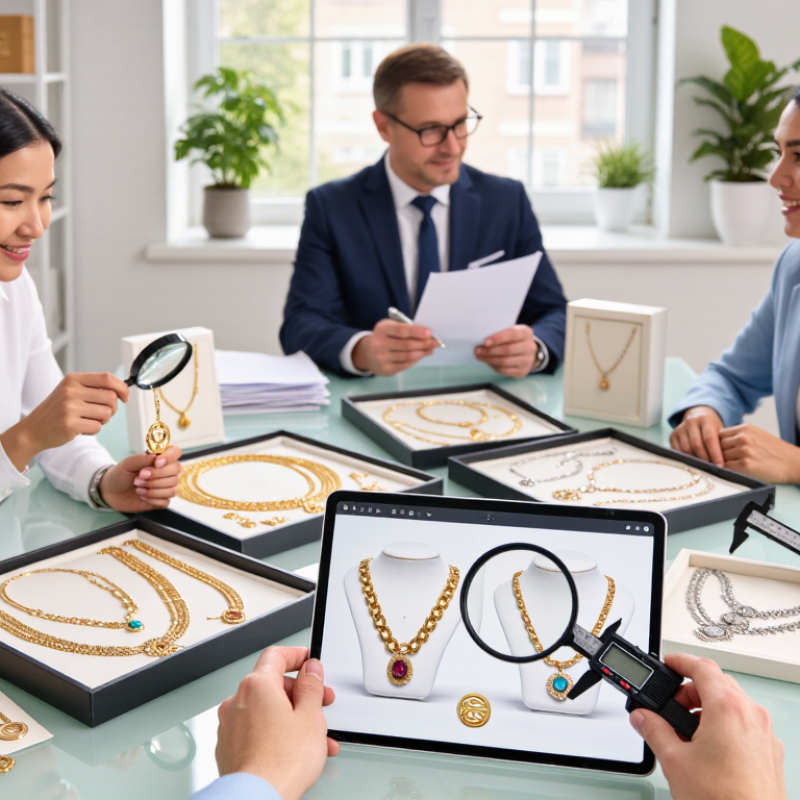
A practical evaluation begins with physical samples. Check the chain’s weight, clasp movement, stone settings, surface finish, and packaging protection. Request material specifications and independent test reports when appropriate. Ask about minimum order quantities, sample fees, production capacity, lead times, and quality-control procedures. Reliable suppliers answer clearly and provide evidence. Vague promises deserve caution.

Small tests reveal much.

Supplier experience also matters. An established manufacturer may understand seasonal demand, customization limits, and retail presentation better than a new broker. However, age alone does not prove reliability. Some experienced suppliers still overlook inspection records or changing customer expectations. That is where careful questions become valuable. Compare several samples under natural light, record defects, and assess how quickly each supplier responds to problems. The cheapest offer may become expensive after rework, delays, or customer returns. Sustainability claims also require verification, not attractive wording. Look for traceable materials, responsible packaging choices, and realistic production statements. No supplier is perfect, and no evaluation is completely risk-free. A thoughtful sourcing process reduces uncertainty while protecting quality, margins, and long-term trust.
How to Choose Necklace Jewelry Suppliers in 2026?

Define the 2026 Supplier Scope Using Grand View Research’s $353.3B Market Baseline

How to Choose Necklace Jewelry Suppliers in 2026?

Grand View Research places the global jewelry market at approximately $353.3 billion. This figure should define your supplier scope, not simply decorate your presentation. It includes fine jewelry, fashion jewelry, online sales, and multiple regional markets. Therefore, screen suppliers by product level, material, target customer, and selling channel. A supplier making delicate sterling silver necklaces may not suit a premium gold collection. The difference becomes obvious under a loupe.

World Gold Council’s Gold Demand Trends 2024 reported total gold demand of about 4,974 tonnes, including over-the-counter activity. Jewelry demand remained substantial, but supply costs changed quickly. Ask each supplier for recent metal pricing methods, plating specifications, stone sourcing records, and production tolerances. Request sample measurements, clasp strength tests, and color comparisons under daylight. Small details matter. I once underestimated packaging costs.

Supplier evaluation should also reflect regional trade conditions. Check minimum order quantities, lead times, inspection procedures, and documentation before discussing volume. The International Trade Centre’s trade data can help compare import patterns across target markets. However, public data is not a perfect mirror of current demand. It may lag behind fast-moving online sales. Build a shortlist of three to five suppliers, then compare actual samples, defect rates, communication speed, and corrective actions. A polished catalog proves little. Reliable production evidence carries more weight.

Benchmark Product Demand Against the Jewelry Market’s 6.7% CAGR Forecast

How to Choose Necklace Jewelry Suppliers in 2026?

The jewelry market’s projected 6.7% CAGR offers a useful demand benchmark for 2026 sourcing decisions. Grand View Research expects steady global growth through 2030, supported by online retail, personalized products, and rising disposable income. A growing market does not guarantee every necklace will sell. Supplier selection must connect forecasts with measurable customer demand.

Review search data, reorder rates, and sales by material, length, and price. The World Gold Council reported resilient jewelry demand despite changing gold prices, showing that affordability and design flexibility matter. Ask suppliers for recent production records, material documentation, quality inspection results, and realistic lead times. A supplier offering many designs may still lack consistency. That is easy to miss.

Tips: Compare three suppliers using the same product brief. Request samples with 16-inch and 18-inch chains, then inspect clasps, plating, weight, and packaging. Test a small order before committing to volume. Track defect rates and delivery accuracy. A 6.7% forecast is only a direction, not a sales promise. In practice, customer tastes can shift faster than annual market reports. I would also challenge my own assumptions, especially when a supplier presents impressive projections without transparent evidence.

Necklace Supplier Demand Benchmark: 2024–2030

Indexed benchmark based on the jewelry market’s projected 6.7% compound annual growth rate, with 2024 set at 100. This index helps buyers compare expected necklace-category demand momentum when evaluating supplier capacity, materials, and production scalability.

Verify Gold, Silver, and Diamond Sourcing Through RJC Standards

How to Choose Necklace Jewelry Suppliers in 2026?

Choosing a necklace supplier requires more than comparing prices and product photos. Ask how gold, silver, and diamonds move through the supply chain. The Responsible Jewellery Council (RJC) Code of Practices can help assess ethical, environmental, and business controls. Request the supplier’s current RJC certificate, audit scope, covered facilities, and expiration date. Membership alone is not proof of certified sourcing.

For gold and silver, ask whether the supplier follows an RJC Chain of Custody process. Review refining records, invoices, material declarations, and batch references. These documents should connect the metal to a verified source. For diamonds, request origin information, supplier due diligence, and written declarations covering responsible procurement. A polished certificate can still leave questions. I would not rely on a logo alone.

Tips: Ask for sample traceability records before placing a large order. Check whether the certificate covers manufacturing, trading, or both. Compare document dates with the proposed delivery date. Request independent gemstone and metal testing when specifications matter. Keep written answers in your supplier file. Small gaps are worth questioning.

In practice, visit the workshop if possible. Observe separate storage for certified materials, clear inventory labels, and consistent weight records. Suppliers should explain findings without vague promises. I once treated complete paperwork as complete assurance; that was too simple. Audits reduce risk, but they do not remove the need for buyer judgment.

How to Choose Necklace Jewelry Suppliers in 2026? — Verify Gold, Silver, and Diamond Sourcing Through RJC Standards
Verification Dimension Relevant Standard or Reference What a Reliable Supplier Should Demonstrate Documents or Checks to Request Buying Priority
RJC Certification Scope Responsible Jewellery Council (RJC) Code of Practices (COP) Certification covering the supplier’s applicable business activities, including responsible sourcing, human rights, labor practices, environmental management, business integrity, and supply-chain due diligence. Current RJC certificate, certification scope, validity dates, certification body, and audit status. Confirm the certificate through the RJC’s official member and certification information. High
Material Traceability RJC Chain-of-Custody (CoC) Standard A documented chain of custody for eligible responsibly sourced materials, with controls covering transfer, segregation, mass balance, records, and supplier declarations where applicable. CoC certificate, material transfer records, batch or lot references, supplier declarations, invoices, and reconciliation records. High
Gold Fineness International fineness notation and applicable national hallmarking rules The stated gold purity should match the product specification and testing result. Common fineness markings include 999, 916, 750, and 585, representing approximately 99.9%, 91.6%, 75.0%, and 58.5% gold respectively. Assay or laboratory report, product specification, hallmark photographs, melting or refining records, and independent XRF or fire-assay testing when commercially justified. High
Silver Fineness International fineness notation and applicable national hallmarking rules The stated silver purity should be consistent with the ordered specification. Common fineness markings include 999 for fine silver and 925 for sterling silver, equal to approximately 99.9% and 92.5% silver. Assay report, metal specification, hallmark or fineness marking, supplier batch records, and independent material testing for high-value orders. High
Recycled or Newly Mined Metal RJC COP and recognized responsible-sourcing due-diligence frameworks The supplier should clearly identify whether the necklace contains recycled, newly mined, or mixed-source metal. Claims should be supported by a defined calculation method and supply-chain records rather than marketing language alone. Written material declaration, source classification, refinery documentation, mass-balance records, and the methodology used for recycled-content claims. High
Diamond Origin and Conflict-Risk Controls Kimberley Process Certification Scheme and RJC COP For rough diamonds, the supplier should maintain Kimberley Process documentation and trade only through compliant channels. For polished diamonds, the supplier should also provide broader conflict-risk and human-rights due diligence because the Kimberley Process specifically addresses rough diamonds. Kimberley Process certificate for relevant rough-diamond shipments, supplier due-diligence policy, invoices, source declarations, and documented risk assessments. High
Diamond Quality Verification Internationally recognized gemological grading practices Diamond descriptions should state the 4Cs—carat weight, color, clarity, and cut—and distinguish between natural, laboratory-grown, and treated stones. The product description should match the grading report. Independent grading report number, stone measurements, laser inscription where applicable, treatment disclosure, and report verification through the issuing laboratory. High
Supplier Due Diligence OECD Due Diligence Guidance for Responsible Supply Chains of Minerals The supplier should operate a risk-based process covering management systems, supply-chain identification, risk assessment, risk mitigation, independent review, and public or customer-facing reporting where applicable. Responsible-sourcing policy, supplier code of conduct, risk-assessment records, corrective-action reports, grievance mechanism, and annual due-diligence statement. High
Human Rights and Labor Conditions RJC COP, applicable labor law, and international human-rights principles Controls should address forced labor, child labor, discrimination, working hours, wages, occupational health and safety, freedom of association, and grievance handling throughout relevant operations. Social-audit reports, worker health and safety records, age-verification procedures, grievance statistics, corrective-action plans, and subcontractor controls. High
Environmental Management RJC COP and applicable environmental regulations The supplier should manage hazardous substances, wastewater, waste, energy use, emissions, and environmental permits according to the risks of its operations. Environmental claims should be measurable and documented. Environmental permits, waste-transfer records, chemical-management procedures, wastewater results, energy or emissions data, and audit findings. Medium
Product Safety and Compliance Applicable product, chemical, labeling, and consumer-safety requirements in the destination market Necklaces should meet destination-market requirements for restricted substances, sharp edges, small components, plating durability, labeling, and safe use. Requirements vary by country and product type. Material safety test reports, restricted-substance testing, nickel-release testing where relevant, product specifications, packaging labels, and conformity statements. High
Transaction Transparency RJC COP business-integrity controls and standard commercial practice Quotes and invoices should separately identify metal type, fineness, gemstone type, carat weight, treatments, plating, recycled-content claims, quantities, and country of origin where required. Detailed quotation, commercial invoice, packing list, certificate of analysis, country-of-origin information, and written change-control procedure. High
Audit Reliability Independent third-party conformity assessment Certificates should be issued by a qualified independent certification or audit body, remain within their validity period, and clearly state the audited sites and activities. A certificate alone does not guarantee every individual item is responsibly sourced. Certificate number, issue and expiry dates, audit scope, audited locations, nonconformity summary, corrective-action status, and certification-body details. High
Practical Supplier Scorecard Buyer-defined procurement control Before approval, compare suppliers using weighted evidence: certification and traceability, metal and diamond verification, human-rights controls, environmental performance, product compliance, documentation quality, and corrective-action responsiveness. Completed supplier questionnaire, document checklist, sample inspection, independent testing, site-audit result, and written approval decision. Medium
Important qualification: RJC certification evaluates a company’s management systems and relevant operating practices within the stated certification scope; it is not, by itself, a guarantee that every necklace, gemstone, or metal unit is fully traceable to a single mine or source. Always match certificates, batch records, laboratory reports, and legal requirements to the exact products being purchased.

Assess Lab-Grown Diamond Suppliers Against 2030 Growth Forecasts

When choosing necklace jewelry suppliers in 2026, compare laboratory-grown diamond capacity with the 2030 outlook. Bain & Company’s Global Diamond Industry Report estimated the lab-grown diamond jewelry market could reach $5–15 billion by 2030. Forecasts disagree. That matters.

A supplier should explain how its production plan supports this range. Ask for monthly output, growth investment, cutting locations, and inventory records. Request grading reports from recognized gemological laboratories. Check whether stones show consistent color, clarity, measurements, and laser inscriptions. Uneven matching can make a necklace look visibly unbalanced under store lighting.

Price and verification Price alone is weak evidence. The International Gemological Institute reported continued growth in lab-grown diamond submissions and jewelry adoption through recent market updates. However, rapid supply growth may pressure retail prices before 2030. A supplier promising permanent margins deserves scrutiny. Review three years of quotations, replacement policies, and delivery performance. Also examine traceability documents, metal sourcing, quality-control procedures, and packaging tests. These details reflect practical experience, not polished sales language.

Do not ignore design flexibility. A reliable supplier should produce small trial lots, adjust pendant settings, and repeat stone sizes accurately. Ask for samples before signing a large order. I would also test clasp strength and chain fatigue, because laboratory-grown stones do not prevent mechanical failure. My own assessment would remain cautious: strong forecasts support capacity, but they do not guarantee demand, pricing, or supplier stability.

Score Samples, MOQs, Lead Times, Compliance, and Contract Terms

How to Choose Necklace Jewelry Suppliers in 2026?

Choosing necklace jewelry suppliers requires evidence, not attractive catalog photos. Request three samples in different finishes, then score each for clasp strength, chain consistency, polish, packaging, and measurement accuracy. A simple 1–5 scorecard makes comparisons clearer. Test the clasp. Record defects after repeated opening and closing. My own early evaluations focused too much on appearance, and that mistake caused avoidable returns.

Tips: Ask for a paid sample before discussing large orders. Compare sample quality with the supplier’s production piece. Confirm the minimum order quantity for each design, finish, and size. A low MOQ may reduce risk, but it can increase unit costs or limit customization. Request a written lead-time schedule, including sample approval, production, inspection, and shipping. Add buffer days for seasonal delays. Suppliers should explain their capacity honestly.

Compliance and contract terms deserve equal attention. Request material specifications, coating details, test reports, and declarations relevant to your selling markets. Check requirements for restricted substances, labeling, packaging, and responsible sourcing. Documents should match the actual product, not an older collection. Include accepted quality tolerances, inspection rights, replacement procedures, payment milestones, confidentiality, and late-delivery remedies in the contract. Do not rely on verbal promises. A practical agreement protects both sides, although even detailed terms cannot fix weak communication. Recheck every revision before production.